A Brief History of POSTERS
 Saying "poster" in today's world, you will think of either the person who makes a "post" on a social media site or a larger piece of paper with a graphic image.
In either case, the "poster" is meant to attract attention and spread a message.
The word post has an interesting etymology. "A timber of considerable size set upright", "a stand, make or be firm", "a job or position", "to place or put", "to provide direct and rapid communication of messages", "to make known, to bring before the public,"
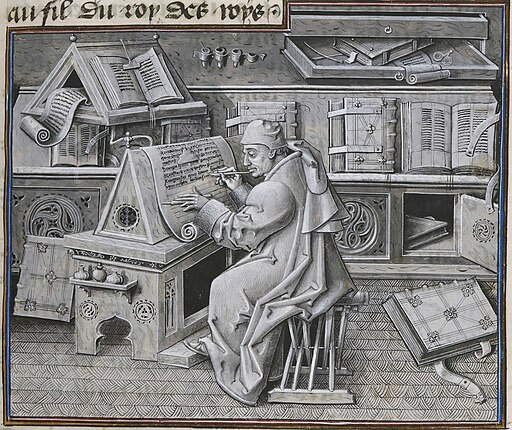
That large piece of paper with a graphic image intended to attract attention and usually reproduced in quantity, had to wait for advances in technology, industrialization, and mass literacy to supplant the human poster - the scribe, town crier, and troubadour - as efficient and versatile advertising for products and events, introducing ideas and influencing opinion (propaganda or education), and art affordable to almost everyone.
Printing, the technique of reproducing multiple copies of an original text and/or pictorial graphic by pressing the ink-coated relief surface to a substrate, usually paper, was first conceived and developed in China as a means of spreading the words of Buddha. The earliest process of duplication, stenciling, has examples stretching from ancient negative hand prints on cave walls around the world, Indonesian batik prints, messages on t-shirts, and fine art serigraphs. And don't forget the paper making!
 When Johannes Gutenberg perfected the technology of moveable type and coupled it with a wine press (c 1450), the time and human energy required to produce an original for reproduction and make copies was greatly reduced.
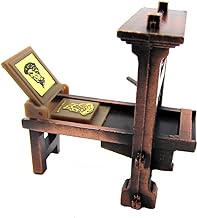
Martin Luther's Ninety-Five Theses were quickly spread throughout Europe due to the printing miniature printing press
The resulting explosion of information (Information Age?) fueled a feedback loop that led to the technology of steam-powered large presses and the chemical process of lithography (Greek, litho=stone, graphy=write).
Now everyone with computer access can be the "poster" - the dictator (meaning both the person who dictates to a stenographer and the political kind), scribe, artist, typesetter, publisher, and distributor of any message through desktop publishing, and digital printing makes it economical to reproduce a single copy on demand. Arthur C. Clarke's 3rd Law of Prediction comes to mind - "Any sufficiently advanced technology is indistinguishable from magic."
Posters in a classroom can be an effective method of instruction. Bringing in reproduction posters from an era such as World War I and World War II immerses the learners in the period, and the comparisons about recruiting, how enemies are identified and demonized, and how the roles of women were evolving are immediate.
Highly recommended - The series James Burke's "Connections". See the connection to paper-making at 21:20 in Faith in Numbers


**Mother Teresa and Gandhi posters are out of stock.